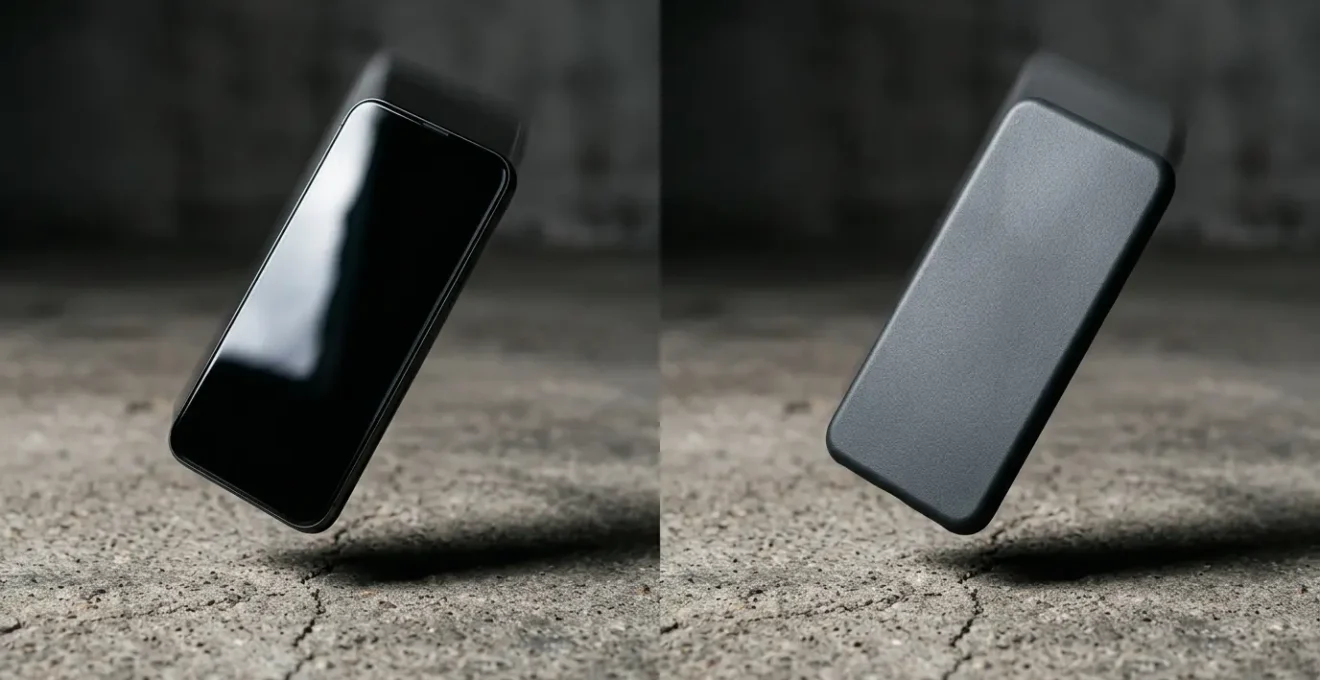
Despite the ‘premium’ marketing, glass-backed phones impose a hidden “clumsiness tax” through extreme repair costs; modern polymer composites offer superior functional resilience and are the smarter economic choice.
- Glass repairs can cost over three times more than polymer equivalents due to the complex, lab-like removal process required.
- Reinforced polymers are engineered to deform and disperse impact energy, protecting internal components where glass simply shatters.
Recommendation: Prioritise phones with polymer or composite bodies and frames for a lower total cost of ownership and genuine, real-world durability.
We’ve all felt that heart-stopping moment. The slow-motion tumble of your expensive smartphone from your grasp, followed by the sickening crunch as it meets the pavement. You pick it up, praying. But the spiderweb of cracks on the back tells the whole story. You’ve just been handed a bill for hundreds of pounds, all for a moment of clumsiness. The industry tells you that glass is “premium,” a mark of quality you should be proud to own. From my workbench, where I see the financial fallout of these design choices every day, I can tell you that’s a costly illusion.
The common advice is to simply get a case, but that ignores the fundamental question: why are we paying a premium for a material that is inherently fragile and astronomically expensive to fix? The debate often circles around aesthetics versus a “cheap” plastic feel. But this misses the point entirely. Modern polymers aren’t the brittle plastics of old; they are sophisticated, engineered composites designed for performance. The real choice isn’t between beauty and budget; it’s between fragile aesthetics and functional resilience.
But what if the key to a long-lasting phone isn’t the brand name, but the very materials it’s made from? This guide challenges the “premium” narrative by focusing on what actually matters when your device inevitably hits the concrete: the physics of impact and the economics of repair. We’ll move beyond marketing and delve into the practical realities of owning a glass phone versus a polymer one. It’s time to stop paying the clumsiness tax and start choosing devices built for the real world, not a showroom.
Throughout this analysis, we will dissect the costs, the science behind shock absorption, and the practicalities of day-to-day use. By the end, you’ll be equipped to evaluate a phone not just for its looks, but for its ability to survive and its true long-term value.
Summary: Polymer vs Glass Shells: Which Material Survives a 2-Metre Drop onto Concrete?
- Why glass-backed phones cost 3x more to repair than polymer ones?
- How does reinforced polymer disperse shock energy away from the motherboard?
- Smooth glass or textured polymer: which is less likely to slip from wet hands?
- The micro-scratch problem that makes premium phones look old in 3 months
- How to clean textured polymer shells without damaging the finish?
- Metal or Polymer frames: which absorbs shock better on a concrete floor?
- Original Battery vs Generic: is the savings worth the fire risk?
- Extending Your Device’s Usable Lifecycle: How to Keep a Smartphone Running Like New for 4 Years?
Why Glass-Backed Phones Cost 3x More to Repair Than Polymer Ones?
The single biggest argument against glass-backed phones isn’t philosophical; it’s financial. When a polymer-cased phone gets a deep gouge, it’s an aesthetic issue. When a glass-backed phone shatters, it’s a structural and financial crisis. The repair cost isn’t just for a new piece of glass; it’s for the highly specialized labour required to replace it. A simple polymer back can often be popped off and replaced in minutes for a minimal cost. In contrast, replacing the back glass on a modern flagship is a surgical procedure.
For example, getting an out-of-warranty back glass repair on a high-end iPhone can cost an eye-watering $549 according to Apple’s official repair pricing. This is what I call the “clumsiness tax”—a steep penalty for a common accident, built directly into the phone’s design. This cost is so high because the glass is bonded to the frame with an incredibly strong adhesive. As the technical team at SimplyMac notes, the process is difficult because it requires melting this adhesive, a task for which specialized laser machines are typically used. This isn’t a job for a local repair kiosk; it’s a lab-grade operation.
This complexity means you’re paying for hours of a skilled technician’s time and the use of expensive equipment. A polymer back, on the other hand, is often designed for serviceability, held in by clips or simple screws. The difference is stark: one is designed to look good, the other is designed to be lived with. For a university student on a budget, paying a £100+ premium for aesthetics that can be destroyed in a second is a poor economic trade-off.
The high cost of glass repair essentially locks you into one of two expensive paths: paying for premium device insurance like AppleCare+ or facing a repair bill that can be half the cost of a new device. This deliberate design choice turns a simple drop into a major financial decision, a problem far less severe with more forgiving polymer materials.
How Does Reinforced Polymer Disperse Shock Energy Away From the Motherboard?
When a phone hits concrete, the laws of physics are unforgiving. The kinetic energy from the fall has to go somewhere. With a glass back, that energy has very few places to go. Glass is rigid and brittle; instead of bending, it concentrates the stress at the point of impact until it reaches its catastrophic failure point and shatters. This sudden fracture does little to absorb the shockwave, which then travels directly through the frame to the delicate components inside, like the motherboard and its thousands of fragile solder points.
Reinforced polymer, however, is a master of energy dissipation. It is engineered for impact. Unlike glass, it possesses elasticity, allowing it to deform, or flex, at the moment of impact. This physical deformation is a process that actively converts kinetic energy into a tiny amount of heat, spreading the force over a wider surface area instead of concentrating it. This is the essence of functional resilience. The material sacrifices its perfect shape for a split second to protect what’s inside.
This paragraph introduces a complex concept. To better understand it, it is useful to visualize its main components. The illustration below breaks down this process.
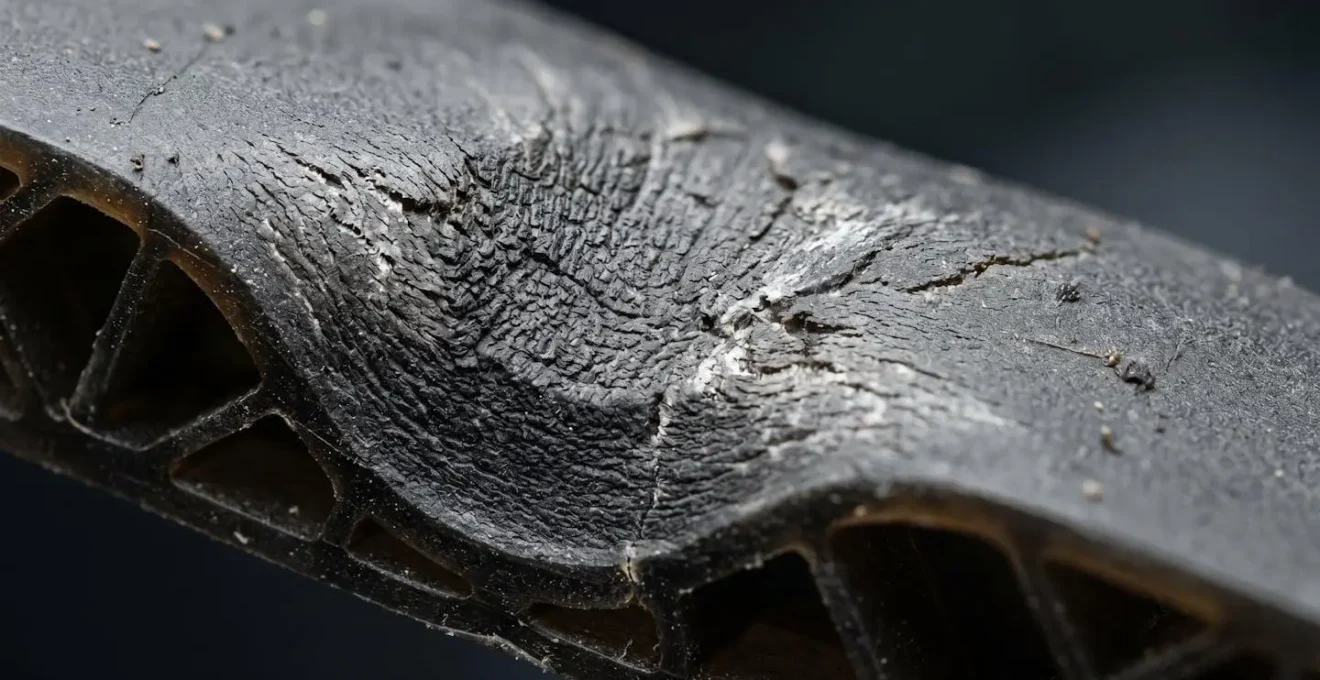
As this visualization shows, the material’s ability to flex is its greatest strength. Scientific research confirms this principle. As one study in Scientific Reports highlights, elastomeric polymers are premier damping and shock absorption materials due to their ability to endure very large strains and their high energy absorption-to-weight ratio. This is precisely why they are the material of choice for shock absorption applications, from running shoes to vehicle bumpers. A phone with a polymer back is essentially wrapped in its own purpose-built shock absorber, a feature that a sleek but fragile glass back can never replicate.
Smooth Glass or Textured Polymer: Which Is Less Likely to Slip From Wet Hands?
The best way to survive a drop is to not drop the phone in the first place. This is where another of glass’s “premium” features becomes a significant liability: its slick, low-friction surface. A smooth, polished glass back may feel nice in a dry hand, but it becomes notoriously treacherous the moment moisture is introduced, whether from rain, sweat, or just condensation from a cold drink. The material’s low coefficient of friction means there is very little to grip onto.
This is a major real-world risk. Many drops happen not from a major fumble, but from a minor loss of grip during everyday handling. As the experts at the Sydney CBD Repair Centre aptly put it, “When your hands are damp, holding a glass phone is like squeezing an ice cube.” It can easily pop right out of your hand. Considering that a significant number of phone drops occur during one-handed use, this inherent slipperiness is a recipe for disaster. The very design that is meant to feel luxurious is actively working against your ability to hold onto your expensive device.
Glass is slippery. When your hands are damp, holding a glass phone is like squeezing an ice cube. It can pop right out of your grip and when you consider that glass breaks and glass scratches, you have a recipe for disaster.
– Sydney CBD Repair Centre, Metal vs. plastic vs. glass vs. ceramic: Which is the best phone material?
In contrast, many polymer-backed phones are designed with grip as a priority. They often feature a matte or textured finish. This isn’t just an aesthetic choice; it’s a functional one. The microscopic peaks and valleys of a textured surface dramatically increase the coefficient of friction, giving your fingers more purchase. This provides a secure hold even with damp hands, drastically reducing the chance of an accidental slip. In the pragmatic choice between a phone that feels like a bar of soap and one that you can actually hold onto, the textured polymer is the clear winner for anyone who uses their phone outside of a pristine, climate-controlled office.
The Micro-Scratch Problem That Makes Premium Phones Look Old in 3 Months
Proponents of glass backs often tout their scratch resistance, pointing to material advancements like Gorilla Glass. While it’s true that modern strengthened glass is highly resistant to scratches from keys or coins, it has a significant and often unmentioned Achilles’ heel: sand. This is a critical issue that leads to what I call “aesthetic depreciation”—the rapid decline in a phone’s visual appeal due to a web of micro-scratches that accumulate from daily life.
The science behind this is straightforward and is explained by the Mohs scale of mineral hardness. As the technical team at PITAKA explains, your fingernail has a hardness of around 2.5, while common metals like iron and nickel (found in keys and coins) are around 4-5. Toughened glass like Gorilla Glass scores a 6.5, making it harder than those metals. This is why your keys won’t scratch your screen. However, the main component of sand and grit is quartz, which has a hardness of 7. Any tiny grain of sand in your pocket or on a tabletop is harder than your phone’s glass and will leave a permanent scratch.
These micro-scratches quickly accumulate, catching the light and making an expensive, “premium” device look worn and old in a matter of months. This aesthetic depreciation also has a real financial impact, as research shows that significant back glass damage can cause a phone’s resale value to plummet by 15% to 40%. A polymer back, while potentially more susceptible to a deep gouge from a sharp object, is far more resilient to the ubiquitous threat of sand. Its softer surface is less likely to be etched by quartz particles, and many composite materials have colour that is integral to the material, not a thin layer on top, so scratches are far less visible.
Ultimately, a glass phone’s “premium” look is fleeting. It requires constant vigilance and is perpetually at risk from an invisible enemy. A polymer phone, by contrast, is designed to better withstand the visual wear and tear of the real world, maintaining its appearance for longer without the need for obsessive care.
How to Clean Textured Polymer Shells Without Damaging the Finish?
One of the practical advantages of a textured polymer shell is its ability to hide fingerprints and minor scuffs, maintaining a cleaner look than a glossy glass surface. However, those same textures that provide excellent grip can also trap dirt, dust, and oils over time. Cleaning them properly is essential to maintain both the phone’s appearance and the integrity of the material’s finish. Unlike glass, which you can wipe with just about anything, textured polymer requires a more thoughtful approach to avoid degrading its surface.
The key is to be gentle. Aggressive rubbing or the use of harsh chemicals can wear down the matte finish or even discolor the polymer. Solvents like alcohol or acetone should be avoided entirely, as they can permanently damage the material. Instead, the goal is to lift the dirt out of the crevices without abrading the surface. This requires the right tools and a light touch. A soft-bristle brush, like a clean toothbrush, and a microfiber cloth are your best allies in this process.
Proper maintenance ensures that the functional benefits of the textured surface aren’t compromised by a buildup of grime. A clean, well-maintained polymer shell will continue to provide excellent grip and a like-new appearance long after a glass back has become a smudged and scratched mess. It’s a small routine that pays dividends in the device’s longevity and usability.
Action Plan: Deep Cleaning a Textured Polymer Phone
- Dislodge Debris: Use a can of compressed air to blow out loose dust and particles from the textured grooves. This prevents you from grinding them into the surface in later steps.
- Prepare Solution: Create a mild cleaning solution with a few drops of gentle dish soap in a small bowl of lukewarm water. Avoid hot water, as it can affect polymer coatings over time.
- Gentle Scrub: Dip a soft-bristle brush (like an old, clean toothbrush) into the soapy water, tap off the excess, and gently work the bristles into the textured areas using small, circular motions.
- Wipe Residue: Immediately use a damp, clean microfiber cloth to wipe away the soap and grime. Ensure no suds are left sitting in the crevices of the texture.
- Final Dry: Perform a final drying pass with a separate, completely dry microfiber cloth. Use patting motions rather than vigorous rubbing to protect the texture and finish.
Metal or Polymer Frames: Which Absorbs Shock Better on a Concrete Floor?
While the back shell is a major factor in drop survival, the phone’s frame is its skeleton, responsible for maintaining structural integrity. Here again, the choice between “premium” metal (like aluminum or titanium) and engineered polymer has significant implications for durability. Metal frames are often marketed as strong and rigid, which sounds protective. However, in the context of a drop, extreme rigidity can be a weakness.
A metal frame is excellent at resisting bending and twisting forces during normal use. But during a high-velocity impact with a hard surface like concrete, its inflexibility means it transfers shock energy very efficiently. If the corner of a metal-framed phone hits the ground, the frame may dent, but a significant portion of the impact force will be transmitted directly along its rigid structure to the rest of the device, particularly the glass screen and back panel, which are often the first things to crack under the transferred stress.
This paragraph introduces the materials in their pre-impact state. The illustration below highlights their contrasting natures on the very surface they are destined to meet.
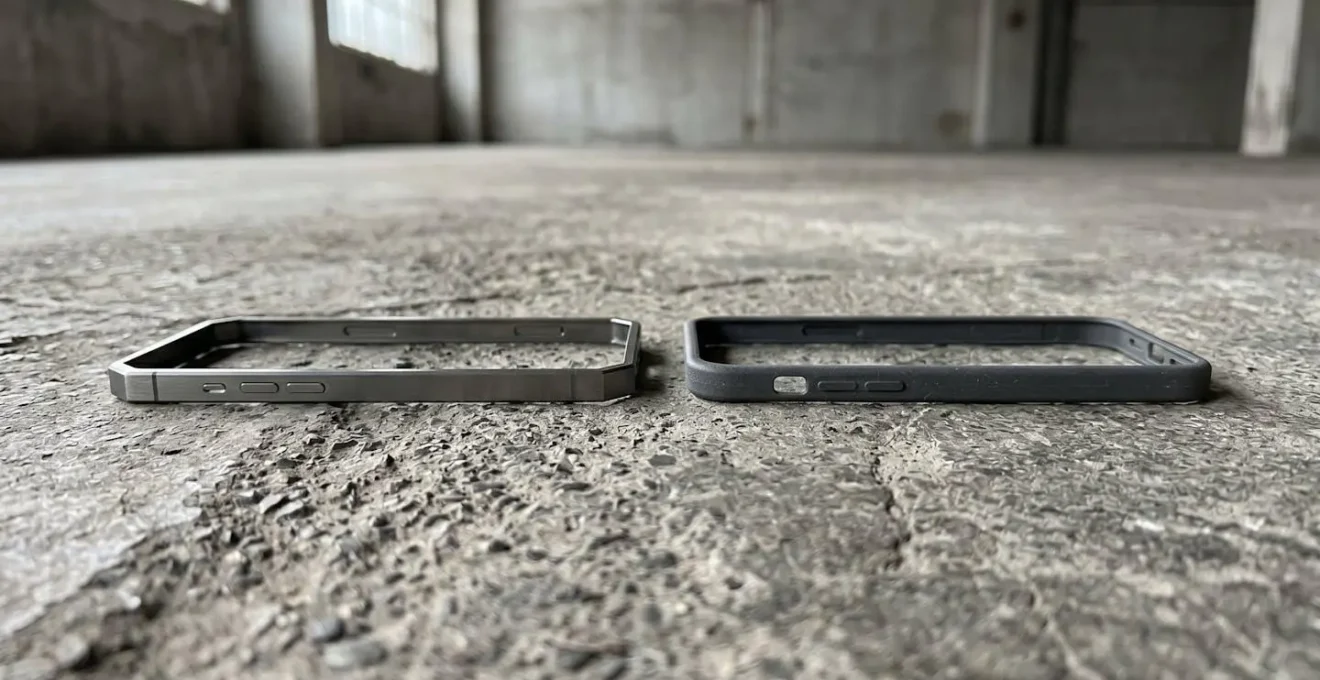
A polymer or polymer-composite frame, on the other hand, behaves differently. Much like a polymer back, it has a degree of engineered flex. This allows it to absorb a portion of the impact energy by deforming slightly, acting as another layer of damping for the entire device. This is the principle behind many “rugged” phones, which often use a combination of a metal sub-frame for rigidity and an outer polymer layer for shock absorption.
Case Study: The Samsung Galaxy XCover Pro’s Rugged Design
A prime example of this principle in action is the Samsung Galaxy XCover Pro. This device is designed for field workers and achieves MIL-STD-810G military-grade durability certification. It does so by strategically combining a rigid internal structure with significant shock-absorbing polymer elements in its outer frame. This proves that a polymer-centric frame design is not a “cheap” alternative but a deliberate engineering choice to maximize shock absorption and device survival in harsh environments.
Original Battery vs Generic: Is the Savings Worth the Fire Risk?
Durability isn’t just about surviving external impacts; it’s also about internal integrity. When a repair is inevitably needed, especially for something as common as a battery replacement, the choice of parts can be the difference between a renewed device and a hazardous one. The allure of a cheap, generic battery is strong, especially for a student on a budget. However, from a technician’s standpoint, this is one of the most dangerous corners to cut.
Original Equipment Manufacturer (OEM) batteries are designed and tested to work perfectly with your phone’s charging circuitry. They include crucial safety features like accurate temperature sensors and voltage regulation chips. These components prevent the battery from overcharging, overheating, or drawing too much power, ensuring both performance and safety. When you save £20 on a generic battery, you are often forfeiting these essential safety mechanisms.
As one mobile repair industry analysis points out, generic batteries often lack these precise sensors and regulation chips. This can lead to a host of problems, from severe performance degradation to dangerous physical swelling. A swelling battery exerts immense pressure from inside the phone, which can easily crack the screen or the back panel from within, landing you with another expensive repair. In the worst-case scenario, this overcharging and overheating can lead to thermal runaway—a polite term for the battery catching fire. The risk of fire or damage to your device far outweighs the small initial savings.
Choosing an OEM battery, or at the very least a high-quality aftermarket battery from a reputable supplier, is a critical part of maintaining your device’s long-term health and your own personal safety. It ensures the internal components are as resilient and reliable as you’d want the external shell to be.
Key Takeaways
- The “premium” feel of glass comes with a hidden “clumsiness tax” in the form of repair costs that can be over 300% higher than for polymer.
- Reinforced polymer provides superior protection by deforming to absorb and disperse impact energy, whereas brittle glass shatters and transfers shock to internal components.
- Glass phones are prone to accumulating a web of micro-scratches from common sand/grit, rapidly diminishing their aesthetic appeal and resale value.
Extending Your Device’s Usable Lifecycle: How to Keep a Smartphone Running Like New for 4 Years?
Choosing a durable phone from the start is the best first step towards a long device lifecycle, but true longevity comes from a combination of smart initial choices and the ability to maintain the device over time. This extends beyond just the case material and touches on a growing movement: the Right to Repair. A phone’s usable life shouldn’t end the first time something breaks or the battery degrades. A truly resilient device is one that can be economically and practically repaired.
This is where repairability scores become an invaluable tool for the pragmatic consumer. Organizations like iFixit rigorously test new devices to determine how easy they are to disassemble and repair. A high score often indicates a design that uses screws over excessive glue, offers modular components that can be replaced individually, and has readily available spare parts and repair manuals. Choosing a phone with a high repairability score is a vote for a more sustainable and cost-effective model of ownership.
The following table provides a clear comparison of repairability for several recent and upcoming models, based on expert analysis. It highlights which brands are making genuine efforts to empower consumers and which are still reliant on designs that hinder simple repairs.
This data, based on a comprehensive analysis of smartphone repairability by iFixit, reveals a clear divergence in design philosophy.
| Brand/Model | Repairability Score (0-10) | Key Strengths | Key Weaknesses |
|---|---|---|---|
| Fairphone 5 | 10/10 | Adhesive-free screen and battery repairs, modular design, parts readily available | None significant |
| HMD Skyline | 9/10 | Novel camshaft opening mechanism, well-prioritized repairs, official parts support | Battery adhesive requires extra effort |
| Google Pixel 9 Pro | 7/10 | Electrically-releasing battery adhesive, screen repair prioritized, comprehensive service manual | Multiple screw types, continued reliance on adhesives |
| Samsung Galaxy S24 | 6/10 | Modular charge port, easier battery removal vs prior models, some parts available | Screen tightly glued to chassis, adhesive hampering repairs |
| iPhone 16 Pro | 7/10 | Novel battery adhesive technology, design prioritizes screen access | Four different screw types complicate basic repairs |
To keep a phone running like new for four years or more, focus on three pillars: a durable initial build (favouring polymer), a healthy battery (using OEM parts for replacement), and, crucially, high repairability. This combination empowers you to overcome the inevitable issues of aging technology, from a degraded battery to a broken charging port, without having to buy a whole new device.
Ultimately, the choice is yours. You can invest in a phone that prioritizes a fragile, showroom aesthetic, or you can choose one engineered for the realities of daily life. For a truly long-lasting and cost-effective device, look past the marketing and focus on materials and a design philosophy that values functional resilience and repairability.