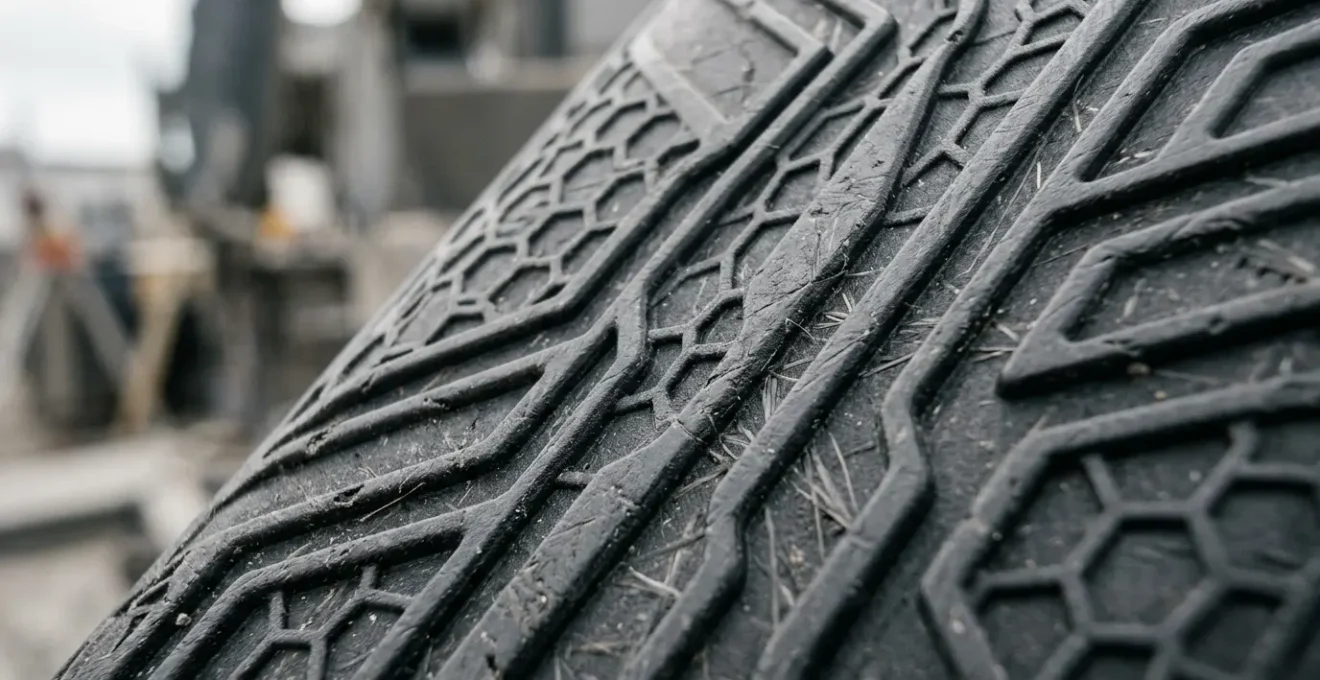
Contrary to the belief that metal equals strength, for field professionals, a device’s most critical material property is its ‘functional texture,’ not its premium look.
- High-density composites offer superior resistance to humidity, chemicals, and impact-related internal damage compared to standard metal alloys.
- Composites provide thermal neutrality, meaning they don’t become uncomfortably hot or cold, a crucial benefit for all-day handling in variable weather.
Recommendation: When selecting a device for site work, prioritize materials engineered for tactile grip (even with gloves), environmental resilience, and structural integrity over purely aesthetic considerations like polished metal.
As an architect or construction professional, you know the frustration. Your sleek, metal-and-glass phone feels premium in the boardroom but becomes a liability on a job site. It’s slippery with gloves on, painfully cold on a winter morning, and a single drop on concrete can spell disaster. The prevailing wisdom in consumer tech equates heavy, cool-to-the-touch metal with quality and durability. Standard plastics are often dismissed as a budget option, a compromise in the pursuit of a lower price point. This leads many to believe the choice is simply between a premium but fragile metal device or a bulky, aftermarket “rugged” case that makes it unwieldy.
But what if this entire framework is flawed for professional use? What if the true measure of a field device’s material isn’t its shine or weight, but its inherent functional properties? The conversation needs to shift from aesthetics to performance under pressure. This is where high-density composite materials enter the picture, not as a cheaper alternative, but as a functionally superior solution. Their value isn’t in how they look, but in how they perform when exposed to humidity, chemicals, extreme temperatures, and repeated impacts. It’s about a concept we can call ‘functional texture’—the synthesis of grip, thermal stability, and resilience.
This article will deconstruct the material science behind rugged devices. We will explore why composites outperform alloys in humid conditions, how high-density molding prevents the dreaded internal rattle after a fall, and why a lighter composite phone is actually better for all-day carry. We’ll also provide actionable advice on cleaning, port protection, and choosing the right level of durability for your specific work environment, proving that for a true field professional, texture will always matter more than looks.
To navigate this in-depth analysis of material science for field devices, the following summary outlines the key areas we will cover, from environmental resistance to the practicalities of daily professional use.
Summary: Deconstructing the Materials of a Truly Rugged Device
- Why composite materials resist humidity better than standard alloys?
- How does high-density molding reduce internal rattle after drops?
- Heavy metal or light composite: which is better for all-day pocket carry?
- The cleaning fluid mistake that degrades standard plastic but not composites
- When will recycled composites become the standard for all smartphones?
- Metal or Polymer frames: which absorbs shock better on a concrete floor?
- How to keep dust out of your charging port without losing accessibility?
- Ruggedized Bumper Cases: Which Protection Level Do You Need for Outdoor Work?
Why composite materials resist humidity better than standard alloys?
For any professional working outdoors, humidity is a silent device killer. While most users worry about direct water immersion, the persistent, invisible threat of high humidity can be far more damaging to devices with metal frames, particularly aluminum alloys. These materials are susceptible to a phenomenon known as stress corrosion cracking. The combination of environmental moisture and internal stresses in the metal creates a perfect storm for microscopic cracks to form and propagate, compromising the device’s structural integrity from the inside out. In fact, fracture mechanics research on AA7085-T7451 aluminum alloy shows the crack growth rate more than doubles once relative humidity surpasses the 78-80% mark.
This is where high-density composites offer a fundamental advantage. By their nature, these polymer-based materials are inert to moisture and do not corrode. They are not metals and therefore cannot suffer from galvanic corrosion, an electrochemical process that occurs when two dissimilar metals are in contact in the presence of an electrolyte (like humid air). This is a critical point. Many devices feature multi-material construction, where a metal frame might be in contact with other metallic components. In a humid environment, these contact points become tiny electrochemical cells, accelerating degradation.
A unibody or monocoque composite design, as seen in advanced aerospace applications, eliminates this failure mode entirely. By creating a single, homogenous shell, there are no dissimilar material interfaces to create these corrosive cells. The device is fundamentally more resilient because it’s made from a material that simply doesn’t react to the primary catalyst of long-term environmental wear. For an architect on a coastal site or a surveyor in a tropical climate, this inherent chemical stability is a far greater indicator of longevity than the perceived strength of a metal alloy.
How does high-density molding reduce internal rattle after drops?
A drop on a hard surface is a tale of two impacts: the external, visible damage like a cracked screen or scuffed corner, and the internal, invisible shockwave that travels through the device. In a traditional metal-frame phone, internal components are often mounted as separate modules within the chassis. When the device is dropped, the shockwave can cause these components to vibrate violently, leading to loosened connectors, dislodged parts, and that dreaded “rattle” that signals internal failure. The rigidity of metal is a double-edged sword; it transfers shock energy very efficiently throughout the structure.
High-density composite molding offers a completely different approach to structural integrity, a concept best described as monocoque integrity. Instead of building a simple frame to hold other parts, the entire chassis is precision-molded from a composite polymer. The cavities, mounting points, and support ribs for every single internal component are integrated directly into this single, solid body. This construction method offers a profound advantage in durability.
This integrated structure is designed to absorb and dampen vibrations, rather than transfer them. The polymer matrix has inherent damping properties that dissipate shock energy. Because components are nestled into precision-molded cavities within this unified chassis, they are held securely in place, preventing them from moving or vibrating independently during an impact. This eliminates the primary cause of internal rattle and connection failures. The device behaves less like a box full of parts and more like a single, solid object, significantly increasing its resilience to the cumulative damage of repeated drops and shocks encountered in a professional environment.
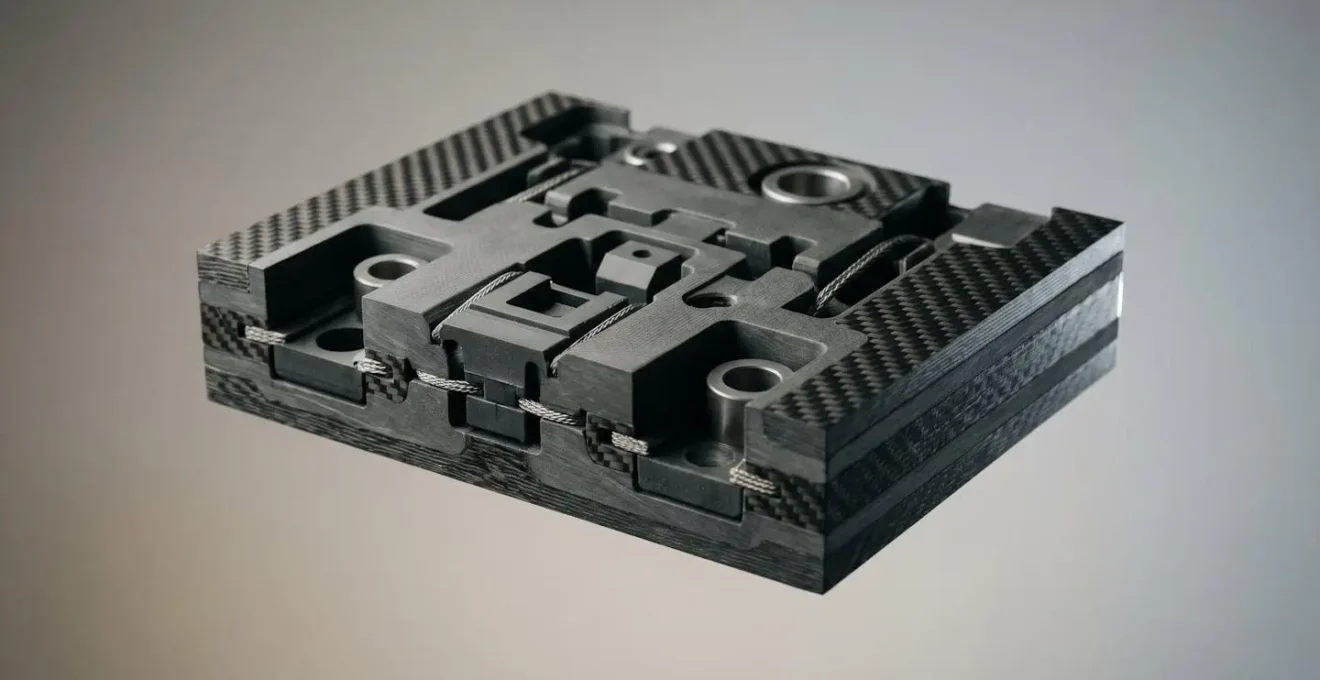
As this detailed cross-section illustrates, the beauty of high-density molding is in its three-dimensional complexity. It’s not just a shell; it’s a fully realized, vibration-dampening endoskeleton that protects the device’s delicate internals by design, not by afterthought. For a field worker, this means the device is not only protected from the first drop but from the hundredth as well.
Heavy metal or light composite: which is better for all-day pocket carry?
The “heft” of a metal phone is often psychologically equated with quality. However, for a professional carrying a device for 8-10 hours a day on a job site, this weight becomes a practical burden. While research using the Rapid Upper Limb Assessment tool found that the average smartphone’s weight is well below the threshold for causing musculoskeletal disorders, the practical considerations of all-day carry go far beyond clinical ergonomic risk. It’s about pocket sag, comfort against the body, and, most importantly, thermal properties.
This is where the concept of thermal comfort becomes a critical, yet often overlooked, aspect of material choice. Metal frames, particularly aluminum, are excellent thermal conductors. This is a significant drawback in a field environment. On a hot, sunny day, a metal phone left in direct sunlight can become uncomfortably hot to the touch. Conversely, on a cold morning, that same metal frame feels like a block of ice in your hand, making it difficult to handle, especially with gloves. This thermal reactivity is a constant source of minor discomfort that adds up over a long workday.
Composite materials, on the other hand, are thermal insulators. They remain remarkably neutral to the touch, regardless of the ambient temperature. A composite device doesn’t absorb the sun’s heat or the winter’s chill in the same way. This thermal neutrality makes it significantly more comfortable to handle and carry against the body throughout the day. It’s a subtle but profound difference that speaks directly to the “functional texture” required for professional use. The material works with you, not against you, by maintaining a stable and comfortable interface with your hand and body, allowing you to focus on the task at hand rather than the distracting temperature of your device.
The cleaning fluid mistake that degrades standard plastic but not composites
A job site is not a clean room. Devices are exposed to dust, mud, grease, and various other contaminants that require regular cleaning. However, what you use to clean your device is critical. Many field workers might grab a common workshop degreaser or solvent, assuming what’s safe for their tools is safe for their phone. This is a costly mistake. Standard plastics used in many consumer electronics, like ABS (Acrylonitrile Butadiene Styrene) and Polycarbonate (PC), have poor resistance to common industrial chemicals.
Solvents like acetone, found in many degreasers, can cause immediate and catastrophic failure in these plastics, leading to softening, crazing (a network of fine cracks), and complete structural breakdown. Even less aggressive chemicals like isopropyl alcohol, often used in sanitizers, can cause stress cracking in polycarbonate over time. This chemical vulnerability is a major weak point for devices not specifically engineered for industrial environments. High-performance composites, such as glass-filled nylon, are a different story. They are engineered from the ground up for superior chemical resistance, making them suitable for environments where exposure to harsh substances is a daily reality.
The following table provides a clear comparison of how different materials stand up to chemicals commonly found on work sites. This data, compiled from industry standards, highlights the stark difference in resilience.
| Chemical/Solvent Type | ABS Plastic | Polycarbonate (PC) | Glass-Filled Nylon Composite | Typical Field Exposure |
|---|---|---|---|---|
| Isopropyl Alcohol (70-99%) | C – Non-resistant, crazing occurs | B – Partial resistance, stress cracking possible | A – Highly resistant | Sanitizers, screen cleaners |
| Hydraulic Fluid (Mineral Oil) | B – Swelling over time | C – Non-resistant, softening | A – Resistant | Industrial equipment contact |
| Acetone/MEK Degreasers | C – Dissolves material | C – Severe damage, immediate softening | A – Excellent resistance | Workshop cleaning agents |
| Dilute Acids (pH 3-5) | A – Resistant short-term | A – Resistant | A – Highly resistant | Battery contact, rain acidity |
| Alkaline Solutions (pH 9-11) | B – Partial resistance | B – Some stress cracking | A – Resistant | Soap, detergents, cleaning |
| Rating Scale: A = Resistant (minimal change), B = Partially resistant (use caution), C = Non-resistant (not recommended). Data compiled from thermoset composite industry standards at room temperature exposure. | ||||
Action Plan: Safe Cleaning Protocol for Field Devices
- Verify detergent composition: Use only a non-caustic detergent and water solution for routine cleaning, ensuring it contains no solvents that could attack the polymer matrix.
- Avoid abrasive materials: Never use scouring pads or abrasive cleaners that could damage the surface finish and compromise the IP rating by creating micro-scratches on seals.
- Identify harmful solvents: Never use brake cleaner, acetone-based products, or paint thinners on standard ABS or polycarbonate, as they cause immediate crazing and structural failure.
- Test on high-performance composites: For glass-filled nylon or similar composites, most industrial degreasers are safe, but always test on a small, inconspicuous area first before full application.
- Rinse after exposure: After any chemical contact, rinse the device thoroughly with clean water within 30 minutes to prevent prolonged exposure that can lead to stress cracking.
When will recycled composites become the standard for all smartphones?
The push for sustainability is reshaping every industry, and mobile technology is no exception. As consumers and corporations become more environmentally conscious, the lifecycle of a device’s materials is under increasing scrutiny. While high-performance composites offer superior durability, their traditional thermoset variants have been challenging to recycle. However, the future lies in thermoplastic composites and innovative recycling processes that are paving the way for a circular economy in rugged devices.
The market for these materials is expanding rapidly; industry analysis shows that the thermoset composites market is expected to reach $93.3 billion by 2030, with a growing segment dedicated to sustainable and recyclable solutions. The key innovation is the shift towards carbon fiber-reinforced thermoplastics (CFRTP). Unlike thermosets, which undergo an irreversible chemical change when cured, thermoplastics can be melted and reformed, making them inherently more recyclable.
Case Study: Carbon Mobile’s Sustainable Approach
A pioneering example is Carbon Mobile, a company that developed a smartphone using CFRTP. Their patented technology overcame the historical challenge of RF signal-blocking in carbon fiber, creating a device that is both lightweight and extremely durable. More importantly, their journey highlights the path to sustainability. They have implemented circular economy practices, such as using recyclable paperboard packaging and partnering to offset carbon emissions. The primary hurdle for widespread adoption of recycled composites is not technological, but logistical: ensuring batch-to-batch consistency of recycled material to meet the stringent performance and certification standards (like MIL-STD) required for high-end devices. As recycling technology and supply chains mature, we can expect to see recycled composites move from a niche feature to a standard material for all smartphones, rugged or otherwise.
The transition won’t be instantaneous. It requires investment in recycling infrastructure and the development of new standards for recycled material quality. However, the trajectory is clear. The combination of consumer demand for greener products and the functional benefits of composites is creating powerful momentum. Within the next decade, a device’s sustainability credentials, including the percentage of recycled composite material in its construction, will likely become as important a selling point as its camera or battery life.
Metal or Polymer frames: which absorbs shock better on a concrete floor?
The common assumption is that metal is stronger than plastic, and therefore, it must be better at protecting a phone from a drop. This is a fundamental misunderstanding of the physics of impact. When a device hits a concrete floor, the critical factor for survival is not the material’s hardness, but its ability to absorb and dissipate energy. This is the difference between elastic and plastic deformation.
A metal frame, being rigid, undergoes plastic deformation upon a severe impact. This means it bends, dents, or deforms permanently. While it may not shatter, the energy of the impact is transferred directly through the rigid frame to the most fragile component: the glass screen. This is why you can have a phone with a dented metal corner and a spiderweb of cracks across the display. The frame did its job of not breaking, but it failed at its more important job of protecting the screen.
A well-engineered polymer or composite frame, however, is designed for elastic deformation. Upon impact, it flexes and momentarily deforms, absorbing the shock energy like a spring. It then returns to its original shape. This process converts the sharp, destructive shock of the impact into a less harmful, distributed force, significantly reducing the energy that reaches the screen and internal components. Modern rugged devices are engineered to this principle, with military-grade testing standards requiring that MIL-STD-810H certified devices withstand drops from up to 2.5 meters onto concrete.
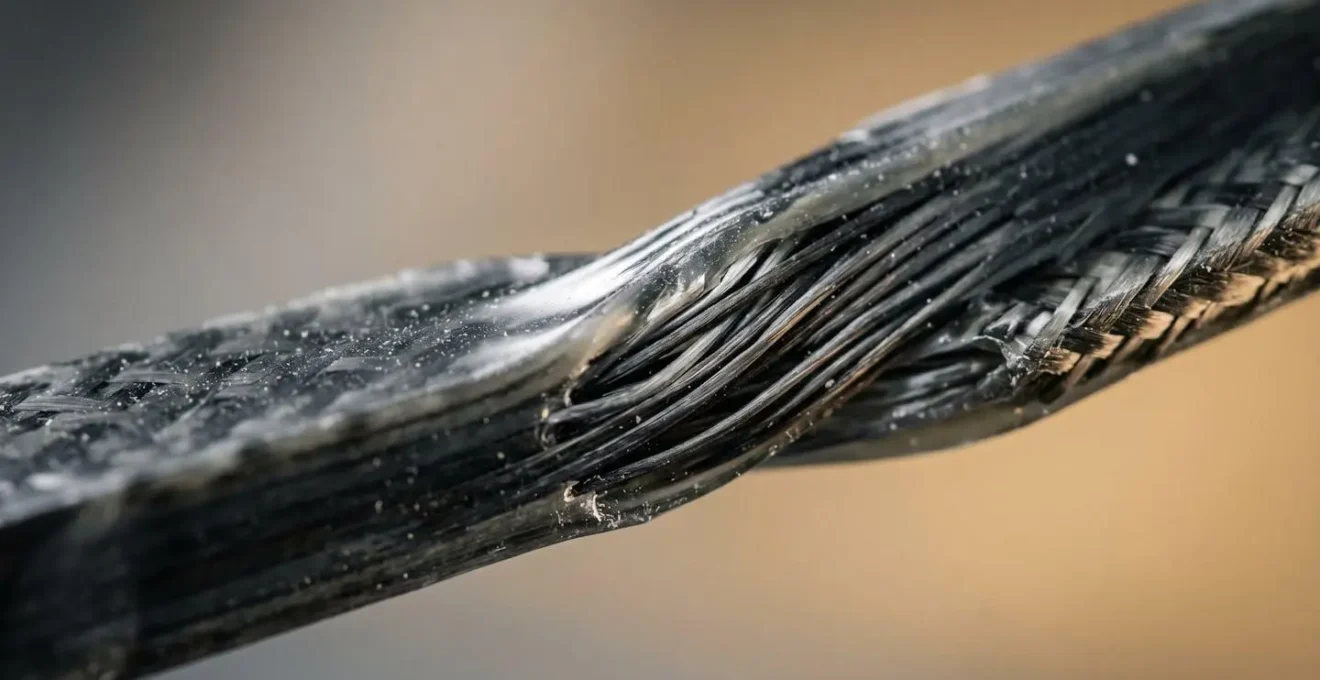
This macro view captures the essence of elastic deformation. The material bends to absorb the force, preventing it from becoming a catastrophic failure. In essence, a polymer composite frame acts as an integrated shock absorber for the entire device. It sacrifices the superficial “strength” of rigidity for the far more valuable functional strength of energy absorption, making it the unequivocally better choice for surviving real-world drops on unforgiving surfaces.
How to keep dust out of your charging port without losing accessibility?
For anyone working in construction, manufacturing, or agriculture, dust is not just a nuisance; it’s a primary cause of hardware failure. The charging port is one of the most vulnerable entry points. A buildup of fine particulate matter can block electrical contacts, leading to charging issues, and can even work its way deeper into the device. The traditional solution has been rubber or plastic port covers, but these present their own set of problems. They can be cumbersome to open with gloves on, the tether can break, and if not sealed perfectly, they can trap moisture and dust inside.
Modern rugged device design has moved beyond these clumsy mechanical covers by engineering protection directly into the device’s architecture. The solution involves a combination of recessed port design and precision-molded composite housings. By recessing the USB-C or charging port deep within the composite shell, it is naturally shielded from the majority of ambient dust and debris. The smooth, continuous surfaces created by precision molding leave no gaps or seams for dust to penetrate around the port area.
This design philosophy is a core part of achieving high-level Ingress Protection (IP) ratings. A device like the Ulefone Armor X16 Pro, for example, achieves its IP68/IP69K certification without relying on mechanical plugs. Its ability to withstand high-pressure water jets and fine dust is a testament to the precision of its construction. As the Digital Camera World review team notes when analyzing top-tier rugged phones:
The IP69K rating is the highest available, meaning it shrugs off high-temperature, high-pressure water jets as well as dust and standard immersion.
– Digital Camera World Review Team, Best Rugged Phone in 2026 Analysis
This “coverless” protection offers the best of both worlds: uninhibited access to the charging port whenever needed, combined with market-leading protection against the fine particulate matter that is a constant presence on any job site. It’s a solution that prioritizes both robustness and usability, a hallmark of thoughtful industrial design.
Key Takeaways
- Composites over alloys: For resisting humidity and preventing corrosion, inert polymer composites are fundamentally superior to reactive metal alloys.
- Monocoque integrity: High-density molding creates a single, vibration-dampening chassis that prevents internal component damage from drops, a failure point for traditional frames.
- Functional texture is key: For field use, a material’s thermal neutrality, chemical resistance, and grip (functional texture) are more important than its aesthetic shine.
Ruggedized Bumper Cases: Which Protection Level Do You Need for Outdoor Work?
Even with an inherently rugged device, the specific hazards of your work environment may dictate the need for additional protection. The term “rugged” is not a monolith; it’s a spectrum of protection levels designed to counter specific threats. Choosing the right bumper case or level of built-in protection isn’t about getting the “toughest” one available, but about matching the device’s capabilities to the real-world risks you face. A logger in the Pacific Northwest has different needs than a warehouse manager in Arizona.
The cost of getting this wrong can be substantial. Beyond the inconvenience, the financial impact is significant, as research shows smartphone repair is a $4 billion-a-year industry in the U.S. alone. Making an informed choice about protection is a critical part of managing the total cost of ownership for your mobile equipment. The Military Standard (MIL-STD-810) provides a useful framework, as it outlines specific tests for different environmental stresses such as drops, vibration, humidity, salt fog, and extreme temperatures. A device or case certified for “drop shock” is not necessarily prepared for a marine environment.
To make a truly informed decision, you must conduct a simple risk assessment of your own worksite. What are the primary hazards? Are you dealing with drops from height onto concrete, constant exposure to fine dust, corrosive saltwater spray, or extreme temperatures? Answering these questions allows you to select a protection level that provides adequate defense without unnecessary bulk or expense. The following matrix, based on MIL-STD-810G/H specifications, provides a guide to matching work environments with their required protection levels.
| Work Environment | Primary Hazard | Required Protection Level | MIL-STD-810 Test Priority | Case Texture Consideration |
|---|---|---|---|---|
| Construction Site | Drops from height (1.2-2.5m), concrete impact, dust | IP68 minimum + MIL-STD-810G/H drop test | Drop shock, vibration, dust | High-grip texture for leather work gloves |
| Marine/Offshore | Saltwater corrosion, humidity, water immersion | IP68/IP69K + corrosion resistance | Humidity, salt fog, water immersion | Non-slip when wet, easy to clean |
| Warehouse/Logistics | Repetitive drops, barcode scanner integration, battery life | MIL-STD-810 drop + ergonomic design | Drop shock, operational compatibility | Texture must not interfere with nitrile gloves |
| Cold Storage/Arctic | Extreme low temperature, battery performance, screen responsiveness | MIL-STD-810 low temp (-20°C to -40°C) | Low temperature, thermal shock | Insulating properties, touchscreen compatibility |
| Hot Industrial (Foundry) | High ambient heat, thermal stress on seals | MIL-STD-810 high temp (60°C+) | High temperature, thermal stability | Heat-resistant materials, no melting |
| Protection requirements based on MIL-STD-810G/H specifications and real-world field testing across industries. Source: Samsung Galaxy XCover Pro durability analysis and enterprise mobility studies. | ||||
Ultimately, selecting the right device is an exercise in material honesty. It requires looking past the marketing of “premium feel” and assessing materials based on their performance in the messy, demanding reality of a worksite. The next time you evaluate a device, assess its functional texture: its grip, its thermal stability, and its resilience. The next step is to demand a tool engineered for your work, not just for a showroom.